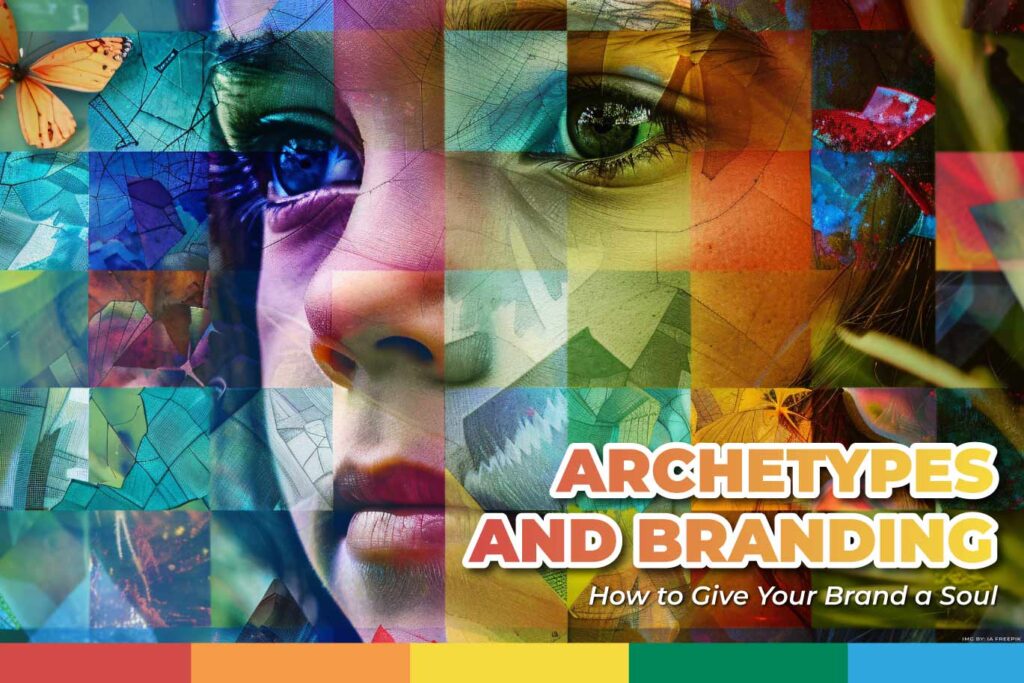

In a market saturated with products and services, the brands that truly connect don’t just sell — they tell stories, evoke emotions, and reflect recognizable personalities.
One of the most powerful tools to achieve this is the use of brand archetypes.
What Are Archetypes and Why Do They Matter?
Archetypes are universal patterns of personality and behavior identified by Carl Jung in the collective unconscious.
In branding, they translate into brand personalities that help create emotional connections with audiences.
It’s not just about aesthetics or tone — it’s about the essence that guides every creative and strategic decision.
When a brand adopts an archetype, it shapes its voice, its visual style, and the way it relates to the world.
Classic examples:
- The Hero – Nike
- The Caregiver – Johnson & Johnson
- The Rebel – Harley-Davidson
- The Sage – Google
Main function:
Archetypes help define how a brand communicates, what values it conveys, and how it stands out in a crowded market.
Why Use Archetypes in Branding?
Archetypes give a brand a clear, coherent personality. They help define emotional tone, build consistent narratives, and connect with people’s deeper desires.
They also make it easier to stand out in saturated markets and create long-lasting emotional bonds with users.
1. Deep Emotional Connection
Archetypes allow brands to speak their audience’s emotional language.
An Explorer inspires freedom.
A Lover evokes desire.
A Jester sparks joy.
This emotional resonance builds loyalty and memorability.
2. Narrative Consistency
From the logo to the copy — and through every campaign or UX decision — the archetype keeps tone, style, and message consistent.
It becomes the backbone of a cohesive, memorable brand experience.
3. Strategic Differentiation
In crowded industries, archetypes position your brand with a unique personality.
You stop competing only on price or functionality — you compete through meaning.
4. A Tool for Co-Creation
For creative teams, designers, and UX writers, the archetype acts as a compass.
It helps align efforts, iterate with purpose, and stay motivated around a shared narrative.
How to Choose the Right Archetype
- Define your brand’s purpose: What change do you want to create in the world?
- Know your audience: What emotions, aspirations, or fears drive them?
- Study your competition: Which archetypes dominate your industry?
- Test tone and storytelling styles: Which one resonates most with your audience across channels?
The 12 Main Archetypes in Branding
Each archetype represents a distinct way of seeing and relating to the world.
- The Innocent: Seeks happiness and simplicity.
- The Explorer: Values freedom and adventure.
- The Sage: Pursues knowledge and truth.
- The Hero: Overcomes challenges and proves strength.
- The Outlaw: Breaks rules and defies systems.
- The Magician: Transforms reality through innovation and wonder.
- The Lover: Moves through passion, beauty, and connection.
- The Jester: Uses humor and irreverence to entertain.
- The Caregiver: Protects, serves, and shows empathy.
- The Creator: Values authenticity and artistic expression.
- The Ruler: Leads with control and order.
- The Everyman (Companion): Values friendship, community, and trust.
Brands That Transcend
Archetypes aren’t just marketing tools — they are bridges between the human and the symbolic, between what we sell and what we represent.
When a brand embraces its archetype, it doesn’t just communicate — it inspires, transforms, and endures.
“Memorable brands aren’t built with data, but with meaning.
And that meaning is born when the archetype becomes your compass, your voice, and your soul.”
So, next time you write microcopy, design an interface, or launch a campaign, ask yourself:
What story is my brand telling? And which archetype is guiding it?
Because in branding — as in myths — what matters most isn’t just the product…
It’s the journey.
Visit our blog for more insights on branding and archetypes.